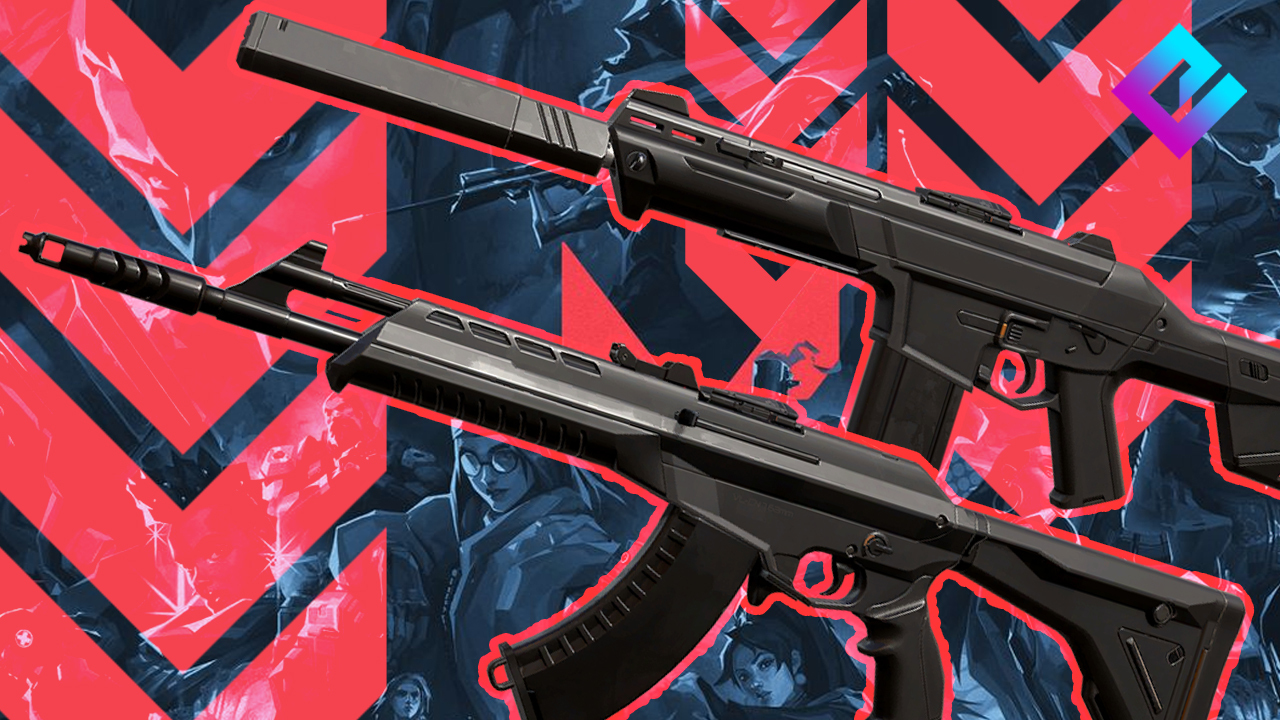
Vandal vs Phantom – Which Is Better in Valorant?
In the fast-paced world of Valorant, choosing the right weapon can completely change the outcome of a match. Among all rifles, the two most debated and powerful guns are the Vandal and Phantom. Both are top-tier assault rifles, both are frequently used by pro players, and both have their own unique strengths and weaknesses. But the real question remains: Vandal vs Phantom – which is better?
In this detailed comparison, we will break down everything you need to know about these two iconic rifles, including damage, accuracy, spray control, recoil, range efficiency, and usage in competitive play. By the end of this article, you’ll know exactly which gun suits your playstyle.
Overview of Vandal and Phantom in Valorant
The Vandal and Phantom are the primary rifles in Valorant, both available for 2900 credits. They dominate mid-to-long range combat and are widely used in all game modes, from ranked to professional tournaments.
The Vandal is known as a high-impact rifle because of its one-shot headshot kill potential at all ranges. On the other hand, the Phantom offers higher fire rate, better accuracy, and suppressed firing, making it ideal for close to mid-range fights.
While both weapons are powerful, their effectiveness depends largely on how and where you use them.
Damage Comparison – Vandal vs Phantom
The main difference between these two guns lies in their damage output.
The Vandal deals a consistent 160 damage with a headshot at any range, meaning it can kill an enemy instantly with one headshot – whether they’re right next to you or on the other side of the map. Its body shot damage is also strong, but its real power lies in long-range headshots.
The Phantom, however, does 156 headshot damage at close range, which is enough for a kill, but its headshot damage drops to 140 after 15 meters. This means after a certain distance, a Phantom headshot won’t kill a fully armored enemy in one shot.
So if you prefer long-range duels and tapping enemies from far away, the Vandal clearly has an advantage.
Fire Rate and Spray Control
When it comes to fire rate, the Phantom is superior. It fires at 11 rounds per second, compared to the Vandal’s 9.25 rounds per second. This higher fire rate makes the Phantom more forgiving in close-range situations.
Another major advantage of the Phantom is its easier spray control. Its recoil pattern is slightly more manageable, making it easier to control when spraying through smokes or dealing with multiple enemies.
The Vandal, while deadly, has a more unpredictable spray pattern. If you miss your first few shots, controlling the rest of the spray becomes difficult, especially for newer players.
If your playstyle involves spraying or fighting multiple enemies at once, the Phantom is usually the better choice.
Accuracy and First Shot Precision
Accuracy plays a huge role in Valorant, especially at higher ranks.
The Phantom is actually more accurate than the Vandal when standing still and shooting. It also has better accuracy while moving, making it slightly more forgiving for aggressive plays.
However, when it comes to first-bullet accuracy at long distances, the Vandal stands out because of its consistent one-tap capability. Even though the Phantom is more precise, its damage drop makes it less rewarding for long-range headshots.
Therefore, Vandal is better for precision players, while Phantom works well for aggressive and movement-based players.
Sound and Tracer Visibility
One of the most underrated differences between these two weapons is their sound and tracer behavior.
The Phantom comes with a built-in suppressor, which makes it significantly quieter when firing. Its bullets also have less visible tracers, which makes it harder for enemies to track your position, especially when you’re shooting through smokes or walls.
The Vandal, on the other hand, is loud and has very visible tracers. This makes it easier for enemies to locate you during fights.
So, if you like playing around smokes, using controller agents like Omen, Brimstone, or Viper, the Phantom gives you a tactical advantage.
Performance in Different Ranges
When comparing Vandal vs Phantom by range, the differences become even more clear.
At close range, the Phantom dominates because of its faster fire rate, smoother recoil, and higher accuracy during movement.
At mid range, both weapons perform well, but the Phantom is still slightly more forgiving due to its spray stability.
At long range, the Vandal takes the lead without question because of its one-shot headshot kill potential and consistent damage.
So, your positioning and preferred engagement distance should strongly influence your weapon choice.
Which Is Better for Beginners?
For beginners, the Phantom is generally recommended. Its easier spray control, higher fire rate, and suppressed firing make it more forgiving when learning the mechanics of Valorant gunplay.
The Vandal requires better aim and discipline because missing a headshot often results in losing gunfights. It rewards accuracy but punishes mistakes more harshly.
If you are still learning recoil control and crosshair placement, the Phantom will help you improve faster.
Which Weapon Do Pros Prefer?
In professional matches, both weapons are heavily used, but you’ll notice a pattern.
Players who play aggressive roles like Duelists often prefer the Phantom due to closer combat scenarios and fighting inside smokes. Meanwhile, players on Sentinel or Controller roles often choose the Vandal for long-range defense and precise headshot potential.
The choice ultimately comes down to map, agent, and playstyle.
Final Verdict: Vandal or Phantom?
So, which is better – Vandal or Phantom?
The answer is simple: neither is strictly better; they just serve different purposes.
Choose the Vandal if:
-
You prefer long-range fights
-
You have good aim and headshot accuracy
-
You like tapping or bursting rather than spraying
Choose the Phantom if:
-
You fight more in close to mid-range
-
You spray through smokes often
-
You prefer smoother recoil and faster fire rate
In competitive Valorant, mastering both weapons is essential. Knowing when to use the Vandal and when to switch to the Phantom is a skill that separates good players from great ones.
Vandal vs Phantom Comparison Table
| Feature | Vandal | Phantom |
|---|---|---|
| Weapon Type | Assault Rifle | Assault Rifle |
| Cost | 2900 Credits | 2900 Credits |
| Fire Rate | 9.25 rounds/sec | 11 rounds/sec |
| Headshot Damage | 160 (all ranges – one-tap kill) | 156 (close), 140 (long range) |
| Body Shot Damage | 40 (close), 38 (long) | 39 (close), 35 (long) |
| Leg Shot Damage | 34 | 30 |
| Damage Drop-Off | No damage fall-off | Damage reduces after 15 meters |
| Recoil Control | Harder to control | Easier to control |
| Spray Pattern | More random | More predictable |
| Accuracy | Lower while spraying | Higher accuracy overall |
| Movement Accuracy | Less accurate while moving | More forgiving while moving |
| Sound Level | Loud | Suppressed (quieter) |
| Tracer Visibility | Very visible | Less visible (better for smokes) |
| Best For | Long-range fights, tapping | Close to mid-range, spraying |
| Ideal Playstyle | Precision & aim-focused | Aggressive & spray-focused |
| Pro Player Usage | Preferred for long-range and defensive play | Preferred for close fights and smoke plays |
Conclusion
The debate of Vandal vs Phantom will continue as long as Valorant exists, and that’s what makes it interesting. Both rifles are perfectly balanced to suit different strategies and playstyles. Instead of asking which is better, ask yourself: Which one fits my gameplay better?
Once you master that, you’ll start winning more gunfights, climbing ranks faster, and improving your overall performance in Valorant.
More Articles
- What Is Valorant? Complete Beginner s Guide If you’re new to Valorant in 2025, this guide will walk yo...
- Rarest Skin Bundles You Can’t Get Anymore – The Ultimate Valorant Guide When it comes to Valorant, skins are more than just cosmetic...
- Dolmir s Revenge Valorant Bundle: Release Date, Pricing, Skins, Variants, and Complete Overview Riot Games continues to expand Valorant’s cosmetic univers...
Get Weekly Updates
Join our newsletter for the latest on Valorant updates and esports.